Hydroseeding has become one of the fastest-growing business within Australia’s civil construction, landscaping, erosion control and environmental restoration industries.
For many businesses, starting a hydroseeding business is a logical next step that increases profitability, improves project control and allows contractors to deliver complete revegetation solutions without relying on subcontractors.
But while a hydroseeding business can be an exceptionally profitable service, it isn’t simply a matter of buying a hydroseeder and waiting for work to appear.
Successful hydroseeding businesses are built on commercial demand, reliable equipment and strong customer relationships.
Whether you’re an established civil contractor, landscaping business, revegetation specialist or someone looking to start a hydroseeding business from scratch, this guide explains what actually determines long-term success in the Australian market.
What is a Hydroseeding Business:
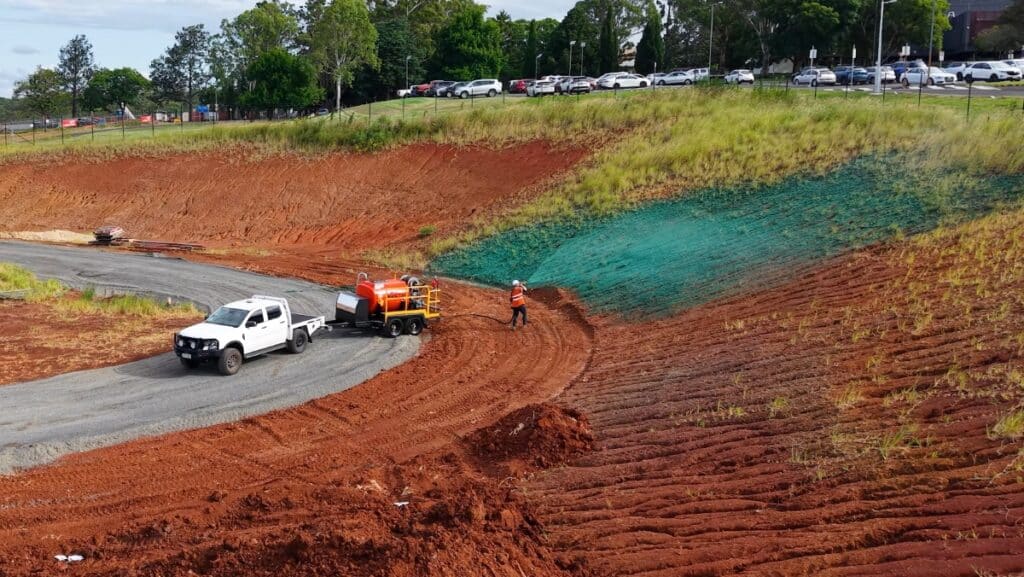
A hydroseeding business applies a slurry mixture of seed, mulch, fertiliser, soil conditioners and water to establish vegetation quickly and uniformly.
Across Australia, hydroseeding businesses are commonly contracted for:
- Civil construction projects
- Road and rail infrastructure
- Residential developments
- Commercial landscaping
- Mine rehabilitation
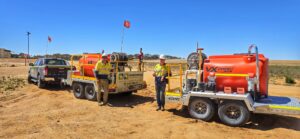
- Erosion and sediment control
- Council parks and reserves
- Pipeline and utility easements
- Environmental restoration projects
- Large-scale lawn establishment
Compared with conventional seeding methods, hydroseeding offers faster application, better erosion protection, improved moisture retention and more consistent germination when completed correctly.
1. Is Starting a Hydroseeding Business Worth It?
The answer depends almost entirely on workload.
The businesses that generate the strongest returns usually fall into one of two categories.
You Already Have Work
This is by far the lowest-risk pathway.
Many Australian businesses already have clients who regularly require:
- erosion control
- batter stabilisation
- revegetation
- lawn establishment
- rehabilitation works
Instead of subcontracting hydroseeding, they simply bring the capability in-house.
This commonly applies to:
- Civil contractors
- Earthmoving contractors
- Landscaping companies
- Environmental contractors
- Local government suppliers
- Rehabilitation contractors
In these situations, adding hydroseeding often improves margins while giving the contractor greater control over scheduling, quality and compliance.
2. You’re Building a Hydroseeding Business From Scratch
Many successful hydroseeding contractors started this way.
However, there is one important reality.
Buying a hydroseeder does not automatically create a business.
Winning work requires:
- Sales
- Networking
- Relationships
- Quoting
- Marketing
- Consistency
The operators who succeed usually spend just as much effort developing customers as they do learning the equipment.
3. How Much Work Do You Need Before Buying a Hydroseeder?
One of the most common questions asked by new operators is:
“How much work makes buying a hydroseeder worthwhile?”
While every business is different, commercial hydroseeding generally begins making financial sense when either:
Option 1
You already have access to hydroseeding work through existing customers.
This could include:
- subdivision developments
- civil construction
- commercial landscaping
- infrastructure projects
- environmental restoration
The important point is that this work comes from established relationships—not speculative tenders.
Option 2
You currently subcontract around Hydroseeding work.
At this point many Australian contractors discover they can significantly improve profitability by bringing hydroseeding in-house.
Benefits often include:
- Higher profit margins
- Better scheduling flexibility
- Faster project completion
- Reduced subcontractor reliance
- Improved quality control
- Stronger customer experience
4. Buying a Hydroseeder Is a Business Decision
A common misconception is that hydroseeding can be “tested” without committing to equipment.
In reality, commercial clients expect contractors to own and operate reliable machinery.
Owning your own hydroseeder allows you to:
- respond quickly to projects
- quote confidently
- complete work without subcontractors
- maintain quality standards
- build credibility
Like any specialised contracting business, the equipment becomes the foundation of your operation.
5. Choosing the Right Hydroseeder
Not every hydroseeder suits every business.
Selecting the right machine depends on:
- Daily production targets
- Crew size
- Transport requirements
- Site access
- Application types
- Future growth plans
- Types of mulch and additives being applied
Many operators underestimate how important agitation performance becomes once they begin spraying heavier wood fibre mulches, bonded fibre matrices (BFMs), flexible growth media (FGMs), polymers, tackifiers and soil conditioners.
Machines designed for commercial production generally offer greater efficiency, better slurry consistency and lower operating costs over time.
Buying purely on purchase price can become an expensive mistake if the equipment limits productivity or struggles with Australian commercial workloads.
6. Australian Conditions Matter
Hydroseeding in Australia presents unique challenges.
Operators regularly work in:
- High temperatures
- Low rainfall
- Heavy clay soils
- Sandy coastal environments
- Rocky batters
- Large infrastructure corridors
- Mine rehabilitation sites
Hydroseeders and Hydromulchers from overseas does not always perform well under Australian conditions.
Reliable local support, spare parts availability and technical backup become increasingly important as project sizes increase.
7. Support Is Just as Important as the Machine
Hydroseeding equipment eventually requires maintenance.
The difference between successful contractors and frustrated operators often comes down to support.
Look for a supplier who provides:
- Operator training
- Technical assistance
- Readily available spare parts
- Local manufacturing
- Ongoing product development
- Agronomic guidance
- Access to consumable suppliers
Downtime costs far more than replacement parts.
Reliable backup keeps projects moving.
8. Is a Hydroseeding Business Right for You?
Generally, Australian contractors fit into one of three categories.
You’re Researching
You’re interested in hydroseeding but haven’t yet identified enough work to justify purchasing equipment.
Keep learning about the industry before investing.
You’re Ready to Build
You’re prepared to invest in equipment and actively build relationships with developers, builders, councils and civil contractors.
Your success will depend on business development as much as operating the machine.
You Already Have the Work
You already subcontract hydroseeding or manage projects requiring regular revegetation.
For many businesses, bringing hydroseeding in-house delivers immediate operational and financial advantages.
9. Frequently Asked Questions About Starting a Hydroseeding Business
Is hydroseeding profitable in Australia?
Yes. Many Australian contractors achieve strong margins when they have consistent work and operate efficiently. Profitability depends on utilisation, pricing, material costs and project type.
Can one person operate a hydroseeding business?
Yes. Many owner-operators begin with a single machine before expanding into larger crews as demand increases.
Who hires hydroseeding contractors?
Typical clients include:
- Civil construction companies
- Property developers
- Landscapers
- Local councils
- Mining companies
- Government agencies
- Environmental consultants
- Utilities
- Infrastructure contractors
How much work can a commercial hydroseeder complete?
Output varies depending on equipment, site conditions and slurry mix. Commercial hydroseeders are capable of treating significantly larger areas than entry-level units while maintaining productivity on large-scale projects.
10. Final Thoughts
Starting a hydroseeding business can be one of the most profitable additions to an existing contracting business when the commercial opportunity is genuine.
The businesses that succeed are rarely the ones with the cheapest equipment—they’re the ones with reliable machinery, strong customer relationships, realistic production expectations and dependable support.
Whether you’re looking to start a hydroseeding business from scratch or bring hydroseeding in-house, the key is making the decision based on real demand, not assumptions.
Clear Next Steps for Your Hydroseeding Business Based on Your Situation
If you’ve identified a genuine opportunity, the next step is choosing the right equipment pathway:
- View entry-level hydroseeders
Designed for new operators and lower-volume applications - View commercial hydroseeders / higher-output units
Built for professional, high-volume hydroseeding operations - View full product ranges
Including support equipment and accessories to create a complete, scalable setup
Hydroseeding can be a powerful, profitable capability when approached with clear expectations, realistic volume assumptions, and the right equipment foundation. The key is understanding whether the opportunity is real — and acting accordingly.