What is Hydroseeding?
Hydroseeding is the application of a water-based slurry containing seed, mulch, fertiliser, soil amendments and dye, sprayed directly onto prepared ground. The method is used to establish vegetation across a wide range of sites, from residential lawns to large-scale civil construction projects.
By combining all components into a single application, hydroseeding allows large areas to be covered efficiently while promoting consistent germination and establishment. It is particularly well suited to sites where access, scale or terrain make traditional seeding or turf installation less practical.
Hydroseeding is commonly used throughout Australia and New Zealand for vegetation establishment, site stabilisation and erosion management. It provides a cost-effective and scalable approach to achieving uniform ground cover across both small and large projects.
Revegetation and Erosion Control
Hydroseeding is widely used for revegetation and erosion control across civil, commercial and industrial projects. It is particularly effective on batters, embankments, stockpiles and disturbed ground where rapid stabilisation is required.
The mulch layer helps reduce surface erosion from wind and rainfall while supporting early seed establishment. As vegetation develops, root systems assist in binding the soil profile, improving long-term stability. This makes hydroseeding a practical solution for meeting environmental management requirements and maintaining site compliance.
Applications in Large Infrastructure Projects
Across highways, subdivisions, pipelines, rail corridors, mining operations and bulk earthworks sites, hydroseeding provides an efficient method of establishing vegetation at scale.
Large areas can be treated quickly with minimal labour compared to turf installation or multi-stage broadcast seeding. This supports project timelines while helping contractors manage erosion risk across exposed ground.
Where environmental controls are required as part of project approvals, hydroseeding offers a straightforward way to stabilise soil, establish cover and maintain site presentation throughout the construction program.
Hydroseeding vs Hydromulching — what’s the difference?
What is hydroseeding?
Hydroseeding is the spray application of a slurry made up of seed, mulch, fertiliser, soil amendments and dye, applied over prepared ground to establish vegetation (lawns or revegetation).
What is hydromulching?
Hydromulching is the same “spray-on slurry” concept, but it’s typically specified and discussed in the context of erosion control and soil stabilisation. A hydromulch mix commonly includes seed + fibre mulch + fertiliser + tackifier/binder + water (and may include dye), creating a protective layer that helps hold material in place on exposed soils and slopes.
So… are they actually different?
In practice, the terms often overlap and people use them interchangeably—especially on construction sites. Some erosion-control guidance even lists “hydroseeding/hydro-mulching” as alternative names in the same category.
Where the difference shows up is in intent and spec:
-
Hydroseeding is usually talked about as vegetation establishment first (lawns, ovals, general revegetation).
-
Hydromulching is usually talked about as erosion and sediment risk management first, using more fibre + tackifiers/binders to create a stronger stabilising blanket over the soil (seed may be included, but the “mulch + bond” performance is the headline).
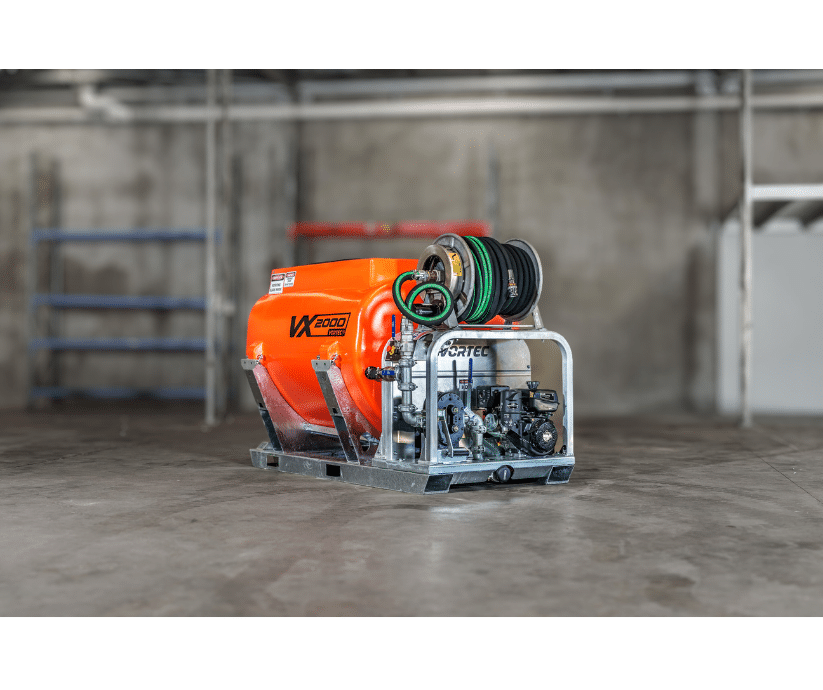
Our Most Popular Hydroseeder – The VX2000
View Product
Historical Background
Origins and Development
What is Hydroseeding – Hydroseeding was developed in the United States in the 1950s as a more efficient way to establish vegetation across large and difficult areas. By combining seed, mulch and water into a sprayable slurry, contractors were able to cover significantly more ground than with traditional hand or mechanical seeding methods.
Since then, the process has evolved alongside civil construction and land development practices, becoming widely used for large-scale vegetation establishment and erosion control applications.
The Hydroseeding Process
How the Process Works
Hydroseeding involves preparing a slurry made up of seed, mulch, fertiliser and water. This mixture is loaded into a hydroseeder, where it is continuously agitated to maintain even distribution.
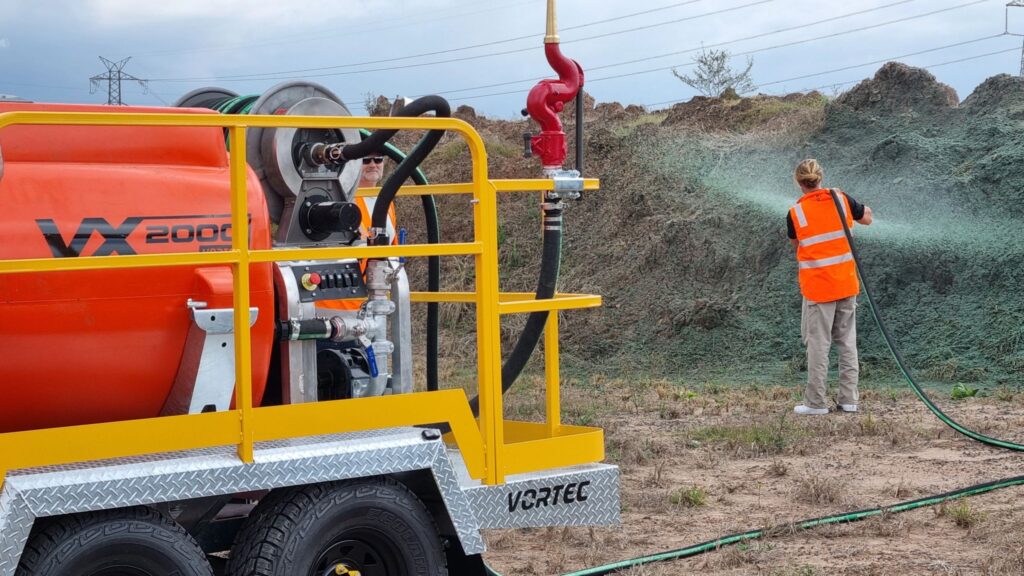
The slurry is then sprayed onto the prepared soil surface using a hose or cannon. This allows consistent application across large areas, including batters, embankments and uneven terrain, while ensuring strong seed-to-soil contact.
Equipment and Technology
Hydroseeding is carried out using purpose-built hydroseeders (also referred to as hydromulchers), available in a range of tank sizes and output capacities to suit different project scales.
These machines are designed to properly mix fibre mulch, seed and additives while delivering an even, controlled spray pattern. Larger units are capable of covering substantial areas efficiently, making them well suited to civil construction sites, infrastructure corridors and subdivision works.
Why Hydroseeding Performs Reliably
During mixing, seed is suspended evenly throughout a nutrient-rich slurry. When applied, the mulch layer helps retain surface moisture and reduces erosion caused by wind or rainfall.
The slurry application ensures the seed is distributed consistently across the soil surface, improving establishment rates compared to dry broadcast methods. On exposed construction sites, this controlled environment supports faster stabilisation and uniform vegetation coverage.
Composition of the Hydroseeding Mixture
Seed Selection and Varieties
Seed selection is determined by site conditions, climate and project requirements. Civil projects may specify fast-establishing grasses for stabilisation, while landscaping or rehabilitation works may incorporate native species or custom blends suited to long-term vegetation outcomes.
The Role of Mulch
Mulch is a key component of the hydroseeding process. It retains moisture around the seed, protects the soil surface from rainfall impact and reduces the risk of wind displacement.
Depending on project requirements, different mulch types — including wood fibre, blended fibre or paper-based products — can be selected to suit slope severity and stabilisation needs.
Fertilisers and Soil Enhancers
Fertilisers are added to support early plant development and root establishment. Where required, soil conditioners or amendments can be included to improve performance on poor or compacted soils common on construction sites.
Binders and Tackifiers
Binders and tackifiers help the applied mulch and seed adhere to the soil surface. This is particularly important on batters and exposed areas where rainfall or irrigation could otherwise displace material before establishment occurs.
Hydroseeding is a one step application
A VORTEC Hydroseeder allows one operator to mix and apply mulch, seed, fertiliser and dye in a single pass. Everything is blended in the tank and sprayed directly onto the prepared surface, reducing the need for multiple operations or separate applications.
On construction sites, this means exposed areas such as batters, stockpiles, drainage lines and road verges can be stabilised quickly and efficiently. Large areas are covered in less time, with fewer personnel required on the ground.
For civil contractors and landscaping crews, hydroseeding streamlines the establishment process. Compared to turf, material and labour costs are significantly lower, particularly across broadacre sites. It is also substantially faster than traditional dry seeding methods, helping projects stay on schedule without increasing material input.
From bulk earthworks and infrastructure corridors to sports fields and residential lawns, VORTEC Hydroseeders are built to handle the full range of vegetation establishment and erosion control applications.
See the range of VORTEC Hydroseeders here:
https://vortecglobal.com/hydroseeders/

Comparing Hydroseeding with Other Methods
Hydroseeding vs. Turf
For large areas and civil applications, hydroseeding is significantly more cost-effective than turf. Material supply, freight and labour requirements for turf installation are considerably higher, particularly across broadacre sites.
Hydroseeding also requires fewer personnel on the ground and can be applied quickly across batters, embankments and irregular terrain where turf handling and placement becomes impractical.
On sloping ground, turf can shift, dry out or fail if not installed correctly and maintained closely during establishment. Hydroseeding applies directly to the soil surface, allowing vegetation to establish in place without the handling and placement risks associated with turf.
Water requirements during establishment are typically more manageable compared to turf rolls, which must be kept consistently saturated to avoid shrinkage or dieback.
Hydroseeding vs. Traditional Seeding Techniques
Broadcast or mechanical seeding often involves multiple stages — spreading seed, applying fertiliser, mulching and stabilising — each requiring separate passes or labour input.
Hydroseeding combines these components into a single, controlled application. This improves efficiency on site and promotes more consistent coverage, particularly across large civil works and disturbed areas where uniform establishment is required for stabilisation.
Hydroseeding vs. Dry Seeding
Dry seeding commonly relies on straw or cover materials to protect seed after spreading. Straw can introduce unwanted weed seed, shift in wind, clump during rainfall and often requires additional handling once germination begins.
Hydroseeding eliminates the need for loose cover materials. The mulch is integrated within the slurry and applied evenly, helping hold seed in place while reducing the risk of wind displacement or uneven coverage.
Although hydroseeding is often viewed as a higher-spec method of establishment, it is generally more labour-efficient than dry seeding and delivers more consistent results across large areas — particularly on construction sites where time and performance matter.
What is Hydroseeding applications and Use Cases
Industrial and Infrastructure Projects
Hydroseeding is widely used across civil construction and infrastructure works where rapid soil stabilisation is essential. It is regularly applied to batters, embankments, road corridors, rail projects, drainage channels and bulk earthworks sites to establish fast ground cover and reduce erosion risk. The ability to spray from a distance makes it ideal for steep, uneven or hard-to-access terrain.
Erosion Control and Land Rehabilitation
On active construction sites, hydroseeding plays a key role in erosion and sediment control strategies. The applied mulch layer helps protect exposed soil from rainfall impact and wind erosion, reduces runoff, and supports vegetation establishment in disturbed areas. It is commonly specified for both temporary and permanent stabilisation, as well as environmental rehabilitation works.
Commercial Landscaping
For commercial developments and subdivisions, hydroseeding provides an efficient way to establish verge works, open spaces, and common areas. It delivers even coverage across large areas, helping contractors complete projects faster while maintaining consistent results.
Residential Lawns
Hydroseeding is also an effective solution for residential lawns, particularly on new builds and larger properties. It offers a cost-effective alternative to turf, provides uniform seed distribution, and allows homeowners to establish a healthy lawn with less labour and faster application than traditional dry seeding.
What are the Advantages of Hydroseeding?
Fast One-Step Application
What is Hydroseeding combines mulch, seed, fertiliser and additives into a single application. For civil contractors, that means large areas of exposed soil can be covered quickly without multiple passes or separate operations. It reduces labour on the ground and helps keep projects moving when timelines are tight.
Rapid Germination and Establishment
The mulch layer helps retain moisture and shield seed from wind and rainfall impact, improving germination conditions on exposed sites. Faster establishment means quicker soil stabilisation on batters, embankments and bulk earthworks areas — reducing erosion risk and helping meet environmental requirements sooner.
Covers Large and Difficult Areas Efficiently
Hydroseeding allows operators to spray large areas from a distance, making it well suited to steep batters, drainage lines, road corridors and uneven terrain. It removes the need to lay turf or manually spread seed in hard-to-access areas, improving safety, speed and overall site efficiency
The easiest way to seed hillsides, steep slopes and irregular areas
Hydroseeding is one of the most practical ways to establish vegetation on batters, embankments, drainage lines and uneven ground. Instead of trying to lay turf or manually spread seed on difficult terrain, operators can apply from a safe position and achieve full coverage quickly across challenging areas.
A premium result that remains cost-effective
Hydroseeding is often viewed as a high-quality solution for lawn establishment and large-scale revegetation. It delivers a professional finish that clients value, while remaining more economical to apply than turf. For contractors, it reduces labour intensity and material handling while still delivering strong results.
Even seed distribution for consistent establishment
Because seed is mixed evenly throughout the slurry, it is applied consistently across the entire surface area. This reduces patchy growth and helps achieve uniform germination — particularly important on large civil sites where consistent ground cover is required for stabilisation.
Nutrient-rich environment that supports faster germination
The mulch and fertiliser within the mixture help retain moisture and create favourable conditions for seed activation. This supports faster root establishment compared to dry seeding, helping vegetation take hold sooner on exposed construction sites.
Strong visual finish
Hydroseeding provides an even, uniform appearance from the day of application. The coloured slurry makes coverage visible during spraying, helping ensure no areas are missed and giving clients confidence the site has been properly treated.
Cost efficiency across large areas
For large-scale works, hydroseeding is significantly more cost-effective than turf and less labour-intensive than traditional broadcast seeding. Fewer crew members are required, application is faster, and large areas can be completed in a shorter timeframe — improving overall project efficiency.
Soil stabilisation and erosion control
The mulch and binding agents in the mixture help hold seed and soil in place, reducing erosion caused by wind and rainfall. This is critical on batters, stockpiles and disturbed ground where stabilisation is required to meet environmental and sediment control standards.
Environmental benefits
Hydroseeding supports rapid vegetation establishment, which helps minimise sediment runoff and dust on active sites. It can also be tailored with native or site-specific seed blends to support long-term rehabilitation and environmental compliance.

Best Practices for Successful Hydroseeding
Site and Soil Preparation
Successful hydroseeding begins with proper site preparation. On civil and infrastructure projects, this typically includes final trimming of batters, removal of loose debris, managing compaction where required, and preparing a stable surface for application. A well-prepared site ensures consistent seed-to-soil contact and reliable establishment across disturbed ground.
Selecting the Right Seed and Mulch Blend
Seed selection is determined by local climate conditions, soil profile and project specifications. For erosion control works, mulch types and application rates are matched to slope severity and stabilisation requirements. Aligning the seed and mulch blend with site conditions supports predictable establishment and long-term performance.
Water Management During Establishment
Moisture management during the germination phase is critical. Maintaining consistent surface moisture supports even establishment, particularly on exposed batters and large earthworks areas. Application timing is generally coordinated with site schedules and weather conditions to minimise washout risk and maximise results.
What Is Hydroseeding Conclusion
So in conclusion, What is Hydroseeding? – Hydroseeding delivers efficient, uniform vegetation establishment across civil construction, infrastructure and landscaping projects. It enables rapid coverage of large or difficult areas while supporting erosion and sediment control requirements on active sites.
Compared to turf installation and broadcast seeding, it reduces labour demands, improves application efficiency and achieves more consistent coverage across varied terrain. From road corridors and subdivisions to commercial developments and residential works, hydroseeding provides a practical and reliable method for achieving strong ground cover and long-term stabilisation.
[/vc_column_text][/vc_column][/vc_row]